Why active women need to rethink protein in midlife
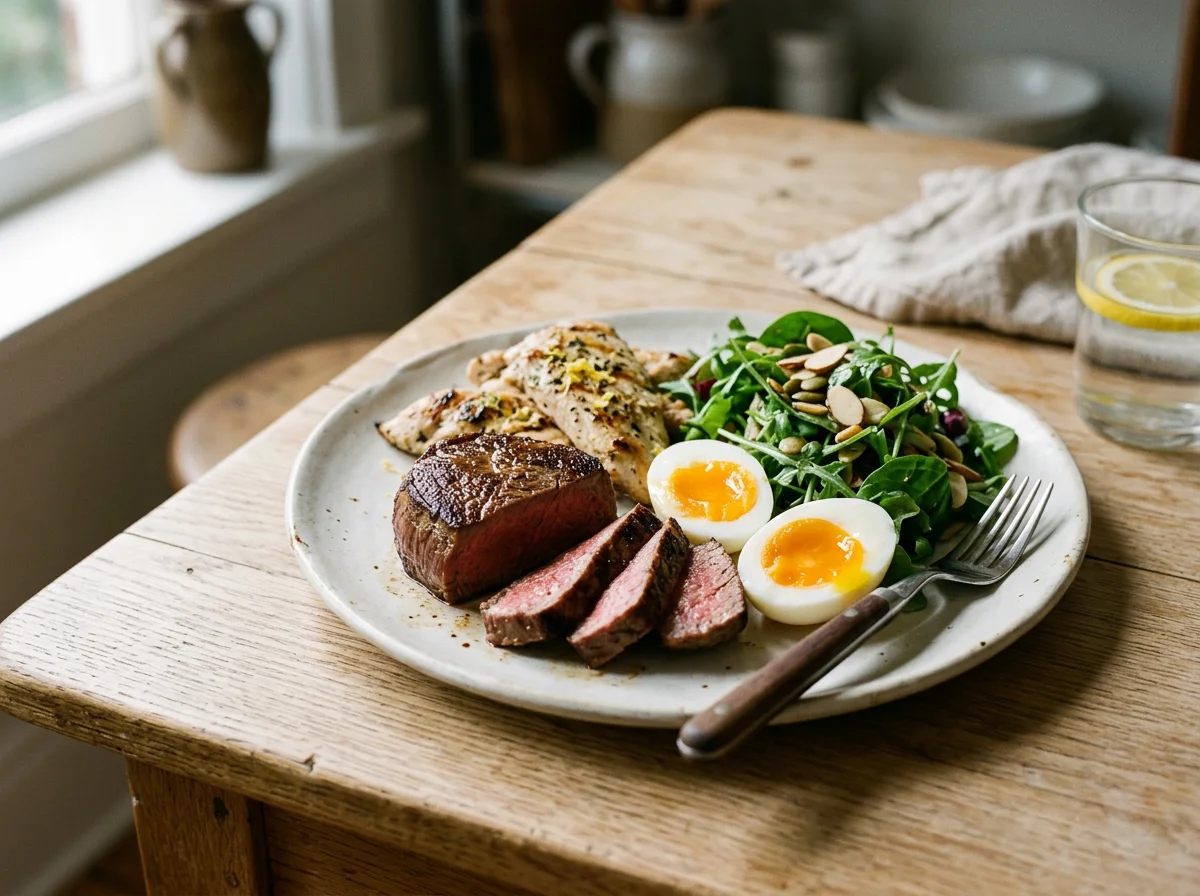
For as long as I've been training, protein has been part of the conversation. I've always understood it as something we need to help our muscles recover after exercise and support muscle growth. And while that's absolutely true, until recently, that was pretty much where my understanding ended.
It wasn't until I began studying women's health and menopause more closely, as part of my menopause coaching qualification, that I started to appreciate just how important protein really is for active women navigating midlife.
Because protein does considerably more than help us recover from a workout. It's involved in the maintenance and repair of almost every tissue in the body, and as our hormones begin to change, getting enough of it becomes an increasingly important part of staying strong and healthy.
What changes during menopause?
Oestrogen plays an important role in maintaining muscle health, supporting the processes involved in muscle repair and helping regulate metabolism.
As oestrogen levels fluctuate during perimenopause and eventually decline after menopause, the hormonal environment that supports muscle maintenance changes. At the same time, our muscles can become less responsive to the signals that stimulate repair and growth.
This is why the type and intensity of exercise we do becomes increasingly important. Heavy resistance training provides a powerful stimulus for maintaining muscle mass and strength, while high-intensity interval training (HIIT) and plyometric exercises help us develop and preserve cardiovascular fitness, muscular power and the ability to generate force quickly.
Combined with adequate dietary protein, these approaches can help us preserve the strength and physical capacity that become so important as we age. And muscle is about far more than how we look. It helps regulate blood glucose, supports metabolic health and plays an important role in maintaining mobility and physical independence as we get older. This is why exercise and good nutrition need to be considered together. One provides the stimulus; the other provides the raw materials.
What is protein and what is it actually doing?
Protein is made up of smaller building blocks called amino acids. When we eat protein, our digestive system breaks it down into these amino acids, which are then absorbed and used by the body to build and repair its own proteins.
But the role of protein extends far beyond muscle. Proteins are essential for producing hormones and enzymes, supporting our immune system, maintaining healthy skin and connective tissues, and repairing cells throughout the body.
There are 20 amino acids commonly used by the body to make proteins, nine of which are considered 'essential' because our bodies cannot produce them, so we have to obtain them through food.
For active women, dietary protein is particularly important because resistance training stimulates muscle protein synthesis, the process of building and repairing muscle proteins. Consuming sufficient protein provides the amino acids needed to support that response.
As we get older, the combination of regular strength training and adequate protein becomes one of our most valuable tools for preserving muscle and maintaining function.
So how much protein do we actually need?
The standard UK recommendation for adults is around 0.75g of protein per kilogram of body weight per day, a figure established more than 30 years ago. But this is a general nutritional reference, not a recommendation specifically designed for active women.
And women aren't simply smaller versions of men. Our hormonal physiology changes throughout our lives, influencing how our bodies respond to exercise, recover and maintain muscle. So we need to look more closely at the research that specifically considers women's needs.
The International Society of Sports Nutrition's research into female athletes recommends higher protein intakes for women who train regularly, particularly during perimenopause and beyond. Around 1.8–2g of protein per kilogram of body weight each day is a useful target for active women, although individual requirements vary.
That might sound like an enormous amount of protein, particularly if you're used to having toast for breakfast, a sandwich or a salad for lunch and something more substantial in the evening. And I think this is where a lot of women struggle. Not necessarily because they're eating badly, but because they simply aren't accustomed to thinking about protein throughout the day.
One of the most useful things I've learned is that distributing protein throughout the day can help support muscle protein synthesis, rather than eating the majority of it at dinner. Aiming for approximately 25–40g of protein at each main meal is a practical approach, depending on your individual requirements.
It's also worth including a protein-rich meal or snack reasonably close to a strength-training session. But this shouldn't mean obsessing over exact timings or carrying a protein shake everywhere. Your total intake across the day remains the priority.
Making protein work in real life
Knowing how much protein we need is one thing. Actually eating enough of it is another. I don't always find it easy to get enough protein into my day, particularly without feeling as though I'm constantly eating. What I've discovered is that preparation really is everything. Keeping the fridge stocked with ready-to-eat, protein-rich foods makes reaching my daily target considerably easier.
I tend to buy ready-cooked chicken breasts and salmon fillets so there's always something substantial in the fridge that I can grab when I'm hungry. I also boil a few eggs at the beginning of the week. They're great as a quick snack, particularly halved with a little cottage cheese and a sprinkle of cayenne pepper or paprika. And I love sourdough crackers or Marmite rice cakes with cottage cheese when I'm craving something crunchy, like crisps. A good shop-bought chicken soup with beans or lentils is another easy option, although it's always worth checking the protein content.
When I’m craving something sweet, which I often do at breakfast time, again, I just try to be prepared for this. One of my favourite discoveries is Dr Stacy Sims' protein pancake recipe, made with oats, cottage cheese and egg whites. You can prepare the batter in advance and keep it covered in the fridge, ready to cook in the morning. A couple of these pancakes topped with thick Greek yoghurt, berries and a drizzle of honey really hit the spot.
Another sweet snack or breakfast I make on repeat is chocolate protein overnight oats. I use a scoop of chocolate protein powder, two tablespoons of oats, a teaspoon of chia seeds and a handful of raspberries for fibre and flavour. I add a splash of almond milk to loosen the mixture, followed by two tablespoons of Greek yoghurt, and give everything a good stir. I make mine in an old jam jar, pop it in the fridge overnight and it's ready to grab in the morning. A serving this size provides approximately 25–27g of protein.
It's also incredibly easy to adapt. You can experiment with different protein powder flavours, swap the raspberries for other berries or fruit, or change the toppings depending on what you fancy.
A different way of thinking about protein
What I've taken from my recent studies is that protein deserves to be part of a much wider conversation about women's health.
For years, I thought about it primarily in the context of exercise and recovery. Now I see it as something fundamental to how we maintain muscle, support our bodies through hormonal change and protect our long-term health.
Understanding how much protein we need, and making a conscious effort to get enough of it, is a relatively simple change that can make a meaningful difference to our body composition, our strength and how well we age.